New York State Matcha Market 2026: What Luxury Hotels, Michelin Restaurants and Specialty Cafés Demand from Japanese Suppliers
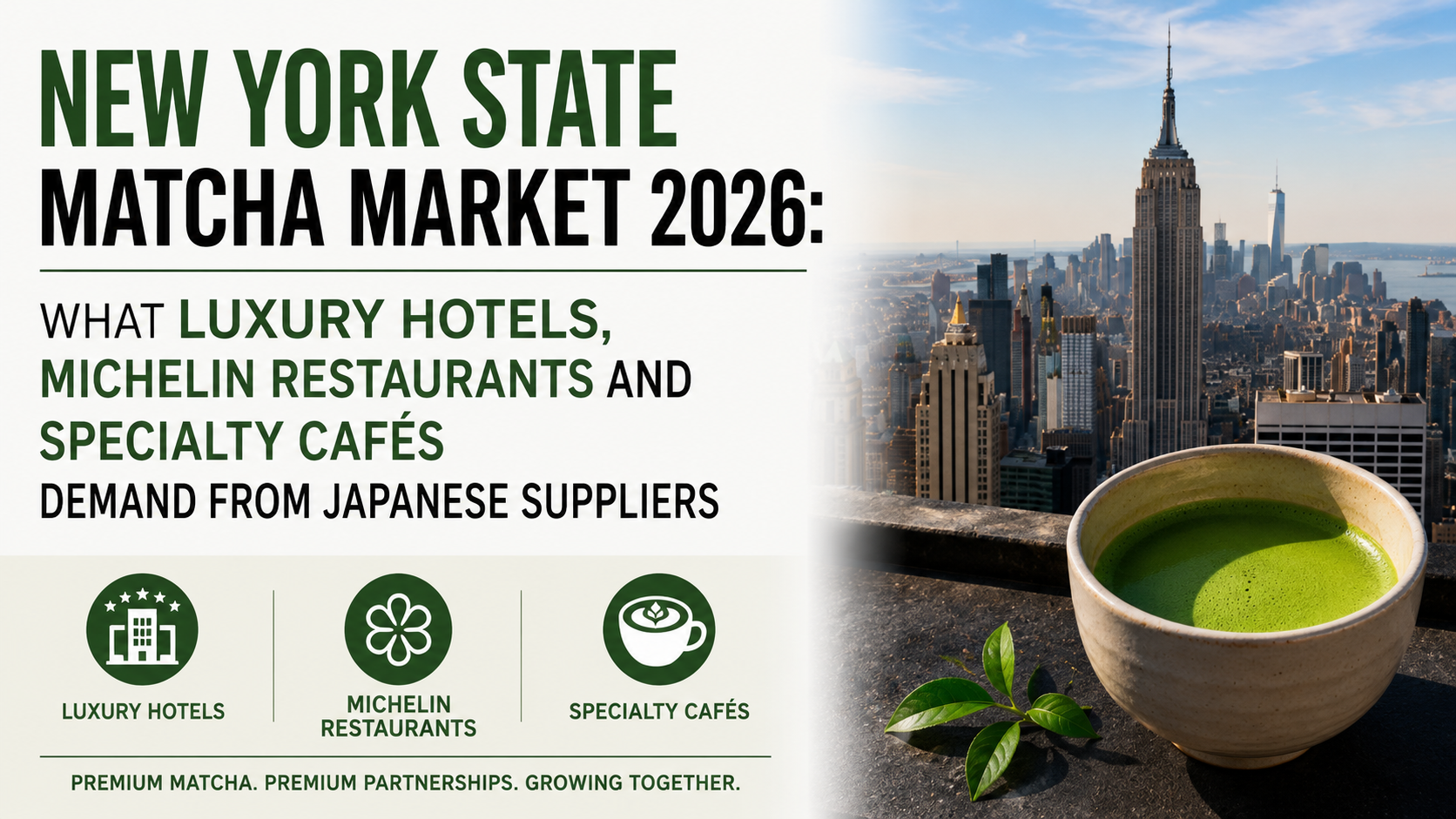
From five-star hotels in Manhattan to independent cafés in Brooklyn and wellness retreats in the Hudson Valley, New York State has become the world’s most demanding B2B matcha market of 2026 — a place where both volume and quality expectations sit at the very top. But local chefs and beverage buyers are not automatically won over just because a matcha is Japanese. In fact, any matcha that cannot articulate its own story and evidence is likely to be dropped after a single tasting. This article breaks down New York’s zone-by-zone demand map, the common failure patterns that get suppliers dropped, a side-by-side comparison of five wholesalers, and the sourcing flow you need to actually make it onto the shelf.
For Companies Seeking Matcha Powder
We source matcha from Japan’s premier production regions including Kyoto Uji, Kagoshima, Fukuoka, and Shizuoka, offering comprehensive grade ranges from organic JAS-certified ceremonial grade to processing-grade matcha.
Common Challenges:
- “We have projects but cannot secure stable matcha supply…”
- “We want to incorporate matcha into new café menu items!”
If you face these concerns, consult with Matcha Times. Feel free to contact us for initial inquiries.
\Read Also/
→ Texas Matcha Market Is Booming: Houston, Dallas, and Austin B2B Demand Analysis 2026
Why New York State Is the World’s Most Strategic B2B Matcha Market Right Now
US matcha consumption is anchored by two coastal hubs — California and New York — but on three metrics that matter most (price ceiling, media reach, and downstream influence on other states’ menus) New York still sits at the very top as the opinion-leader market. The specific tailwinds behind that position are:
- The 2026 Michelin Guide New York continues to feature one of the world’s densest concentrations of starred restaurants, with Japanese and fusion concepts expanding aggressively
- Specialty cafés built around a Japanese identity are moving from single locations to multi-store rollouts, particularly in SoHo and Tribeca
- The Hudson Valley is seeing a surge of wellness retreats and resort spas, generating steady mid-volume demand driven by corporate contracts
- Proximity to the FDA’s East Coast laboratory pushes procurement and legal teams to strongly prefer Japanese matcha suppliers with full certification packages
The US matcha market is estimated at around USD 600 million in 2026, with B2B accounting for more than half of that value and roughly a third of the B2B share flowing into New York State and its metro area. For any Japanese exporter, being adopted by a New York account works as an unusually powerful reference — the kind of credibility that cascades into the Midwest and the West Coast. On top of that, New York’s food industry is uniquely covered by outlets such as The New York Times and international trade press, meaning a matcha brand that wins in New York is quietly promoted to the rest of the global food industry.
In NY, Volume Matters Less Than Context
For New York chefs and beverage developers, matcha is not just an ingredient — it is a storytelling component that anchors the identity of a tasting menu or a signature drink. That is why, in almost every first meeting, questions like these come up before price is even mentioned:
- Which region and which farm does the leaf come from? Single-estate or a blend of multiple growers?
- How many days is the shading period? What is the design intent behind the blend?
- Can you show us the pesticide-application history and a recent lot’s Certificate of Analysis (COA)?
- Which of USDA Organic, EU Organic, NON-GMO Project Verified, Kosher and Halal do you hold?
- What is the target speed of the stone mills and the target particle-size distribution?
In short, New York is not a “cheap and plentiful” market. It is a market that asks “can you explain, in ten seconds, why this specific matcha belongs in this specific venue?” With Chinese and Korean matcha, plus re-packed products falsely branded as Japanese, all pressuring the lower price bands, only suppliers that can genuinely defend their story are able to hold healthy pricing.
\Read More/
→ Matcha Export Isn’t Easy: How FDA and EU Regulations Impact Matcha Brand
The NY Matcha Demand Map: Manhattan, Brooklyn and the Hudson Valley
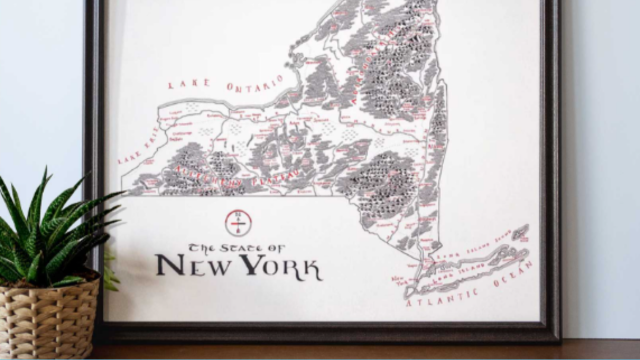
Demand across New York State breaks cleanly into three zones, each with a very different B2B personality.
Manhattan
The archetypal accounts are luxury hotels such as Park Hyatt and Edition properties, Michelin-starred Japanese restaurants and sushi counters, premium corporate dining rooms in the financial district, and hybrid Japanese-Western cafés across Midtown. The requirement is a dual-line supply — ceremonial-grade for tea service, culinary/pastry-grade for kitchens — delivered with reliability. Volumes typically fall in the 10–40 kg per outlet per month range, with quarterly framework agreements as the norm.
Brooklyn
Concentrated in Williamsburg, Park Slope and Greenpoint, the demand is driven by independent specialty coffee shops expanding into matcha menus, vegan/gluten-free bakery brands, and craft RTD (ready-to-drink) startups. Here, storytelling — a visit to the origin, a documented relationship with a specific grower — carries real PR value. Suppliers who can prove a direct, named connection to a Japanese producer have a clear advantage.
Hudson Valley
Wellness retreats, yoga-studio cafés and farm-to-table restaurants are growing fast. In this zone, the presence or absence of organic certification often decides whether an order happens at all. In practice, USDA Organic combined with Japanese JAS Organic functions as the entry passport.
Across all three zones, B2B buyers tend to follow the same three-step ramp: small-lot trial, quarterly purchase order, then annual contract. Two things separate winning suppliers from the rest — the speed of the initial sample proposal, and the lot-to-lot reproducibility afterward. As a rough benchmark, New York wholesale B2B pricing for matcha lands around USD 60–120 per kg for culinary and latte grades, USD 150–300 per kg for premium and ceremonial, and above USD 400 per kg for genuine ceremonial or presentation-grade product. Shipping, customs and certification premiums are stacked on top.
Four Reasons NY Chefs Drop Their Matcha Suppliers
Suppliers that once won a New York account but got dropped within six to twelve months tend to fail in remarkably consistent ways.
1. Failing to explain lot-to-lot variation — Color, aroma and froth behavior all shift with harvest season, but writing that off as “that’s just how it is” quickly erodes the chef’s confidence. The minimum operating standard is sharing per-lot sensory data and a documented seasonal-blending policy.
2. Slow sample turnaround — Beverage buyers in New York routinely compare three to five suppliers in parallel. If your sample takes three weeks to arrive, you are already out. The baseline is DHL/FedEx priority within a week, with a well-organized initial documentation set traveling alongside the tea.
3. Low-quality English documentation — COAs, spec sheets, certificates of origin, allergen statements, pesticide test results — if a native English speaker cannot read them without follow-up questions, legal and procurement stops the deal. Pasting Japanese documents into Google Translate is an instant disqualifier.
4. Delays or gaps in export documentation — FDA FSVP, Prior Notice, Bioterrorism Act compliance, C-TPAT-related data — miss any one, and the shipment sits at JFK, breaking the chef’s menu-development timeline. A second delay is effectively contract-ending.
None of these are about price. They are all about the operational quality that sits underneath price — and without that foundation, you never even reach the negotiation table.
How Sharp NY Buyers Choose a Matcha Supplier: Five Criteria

Experienced buyers in New York filter suppliers on five axes:
1. Breadth of export track record — Not just “we export,” but demonstrable customs experience across multiple continents and regulatory regimes. Shallow experience here means no bandwidth when a sudden rule change hits.
2. Range of grades and uses — Can a single supplier serve ceremonial, premium, culinary, latte, pastry and RTD applications from one contract?
3. FDA / USDA / EU certification coverage — What combination of USDA Organic, EU Organic, JAS, NON-GMO Project Verified, Kosher and Halal do they hold, and can they manage renewal schedules proactively?
4. Lot flexibility — Can the same supplier scale smoothly from a 10 kg test order to a multi-ton annual commitment?
5. OEM and private label capability — Can they design and produce a signature blend for a house brand? Private-label demand in New York is growing rapidly.
Very few suppliers score high on all five. In the next section we put the leading Japanese options side by side on exactly these axes.
Head-to-Head: Five Wholesalers Serving NY B2B
Before you commit to a matcha supplier for this use case, evaluate every candidate on the same criteria. Use the checklist below when you request quotes and samples.
| Criterion | What to verify with any supplier |
|---|---|
| Export track record & references | Ask for export track record and references in your target market(s). |
| Grade & origin options | Confirm the grade range (ceremonial to culinary) and origin/cultivar options matched to your application. |
| Export & safety documentation | Request per-lot COA and the export, customs and food-safety documents your destination market requires (MRL/limit matching). |
| Lot flexibility & MOQ | Check the minimum order quantity, trial-lot/sample availability, and the ability to scale from a small start to larger volumes. |
| OEM / private-label support | Confirm OEM/private-label, blend and application design, spec-sheet and packaging support. |
Apply this checklist to each supplier on your shortlist and decide on current quotes, samples and documentation. JMEX (Japan Matcha Export Organization) is an export-focused Japanese matcha supplier with export experience to 43 countries; you can request pricing and terms directly and assess it against the criteria above.
Why JMEX (Japan Matcha Export Organization) Wins in New York
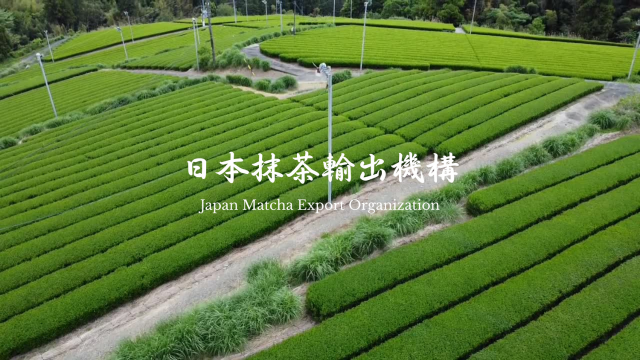
Three factors drive JMEX’s continued adoption in New York B2B accounts:
1. An export track record across 43 countries — With operations spanning North America, the EU, the Middle East, Asia-Pacific and Africa, JMEX brings exactly the kind of multi-regulatory customs experience New York buyers care about. When documentation requirements shift unexpectedly, JMEX can transfer solutions from previous shipments in other regions.
2. A single-contract lineup drawn from the best origin for each use — Uji (ceremonial), Shizuoka (balanced culinary), Kagoshima (body-forward for latte and RTD), and Yame (for pastry and confectionery) — all delivered under one supplier agreement. That origin-portfolio approach is a natural fit for New York hotel groups and restaurant operators running many concepts side by side.
3. B2B-only, from 10 kg trials to full-ton production — The same supplier can carry a New York account from its first test order to a multi-ton annual contract without a handoff, which suits both fast-growing independent stores and expanding chains.
On top of that, English-language COAs, MRL (pesticide residue) test results, allergen statements and certificates of origin are all part of the standard document set. FDA FSVP and Prior Notice information is prepared from the Japanese side, so that internal legal and procurement reviews on the New York side rarely bounce back — a major reason customers move to annual contracts.
The Winning Import Flow: FDA/FSVP, Tariffs and Cold Chain
A trouble-free New York import runs on the following five-step flow.
Step 1 | Requirements intake and sample proposal
Use case, target menus, monthly volume, desired grade and certification requirements are agreed up front. JMEX narrows the candidate set across Uji, Shizuoka, Kagoshima and Yame and prepares samples within 48–72 hours. This first-move speed determines whether a supplier stays on the buyer’s shortlist.
Step 2 | English COAs, spec sheets and certification bundle
Test results for pesticide residues (against both EU and US standards), microbiological, radioactivity and heavy-metal parameters are delivered as an English-language pack alongside USDA Organic / JAS certificates and the relevant NON-GMO, Kosher or Halal statements. Because the formats are standardized, the back-and-forth during legal review is kept to a minimum.
Step 3 | FDA-related support
Shipment from an FDA Food Facility Registration-covered site, Prior Notice, and the data an importer’s FSVP program needs are all supported from the Japanese side. The US importer’s own FSVP registration remains their responsibility, but supplying the underlying data promptly from Japan is what prevents the first import from stalling.
Step 4 | Cold chain and quality-preservation logistics
Matcha is sensitive to heat, light, humidity and oxygen, so vacuum individual packaging combined with aluminum barrier film and temperature-controlled transport under 15 °C is mandatory. JFK, Newark (EWR) and Stewart International are used selectively depending on cost, lead time and handler experience. In practical terms, JFK for Midtown Manhattan destinations, Stewart International for Hudson Valley routes, and EWR’s cargo-specialized facilities for larger loads is a solid default.
Step 5 | Post-clearance quality confirmation and lot-reproducibility contract
Once the shipment lands, sensory-evaluation data is shared with the buyer and a reproducibility policy for future lots is agreed. This is the typical entry point into annual contracts and house-brand OEM development.
US importer registration and customs handling remain buyer-owned territory, but the depth of the export-side work JMEX handles — document preparation, Japan-side procedures, and coordination with local logistics partners — is precisely what makes a supplier feel “safe to work with long-term” from a New York chef’s point of view.
Learn More About Global Matcha Trends at Matcha Times
UK-spreading matcha booms result from overlapping health consciousness, Japanese culture popularity, and lifestyle transformations. However, matcha’s appeal and potential still lie ahead. Knowing latest trends across countries and Japanese tea region initiatives reveals matcha’s deeper dimensions.
Matcha Times broadly publishes from matcha market analysis to cafe situations and farmer interviews. Won’t you also take this opportunity to deeply explore matcha’s world? The more you know matcha, the more surely its charm will draw you in.
Closing Thoughts: What “A Trusted Matcha Partner” Really Means in New York
The New York State matcha B2B market combines the world’s highest price ceiling with the world’s toughest audition process. The suppliers that stay in play over the long run are the ones who can consistently deliver four things — context, documentation, reproducibility and scalability — not the ones with the lowest price.
Backed by a proven export track record across 43 countries, JMEX packages all of that into a single contract: origin-matched sourcing across Uji, Shizuoka, Kagoshima and Yame, fully export-ready English documentation, lot flexibility from 10 kg to 1 ton per month, and OEM/custom-blend design. From five-star Manhattan hotels to independent Brooklyn cafés to Hudson Valley retreats, JMEX operates as a B2B-only partner that can stay with an account regardless of scale — worth putting on the shortlist.
Looking for wholesale or OEM matcha samples? Contact us — we will recommend the optimal origin and grade based on your application and target markets.
Related Articles
→ Will Matcha Latte Take Off in Washington State? A 2026 Deep Dive into the B2B Cafe Market
→ US Matcha Market 2025: Size, Growth Drivers & B2B Entry Strategy for Buyers