Can a Supplier Guarantee 100-1,000 kg of Halal Matcha per Month?
Yes — a capable Japanese exporter can commit to a recurring 100-1,000 kg of halal matcha per month, but a real guarantee is engineered, not a slogan. It rests on an annual allocation reserved against the tea harvest, a buffer stock, grade design that holds your spec across seasons, and a written supply agreement — not a headline “capacity” number on a website. For a GCC buyer there is a second, equal requirement: the matcha must be halal-certified to a standard recognised in your destination market (the GSO 2055 halal food standard, ESMA/MOIAT in the UAE, and the SFDA in Saudi Arabia). This guide explains what a monthly volume guarantee actually requires, how order scale drives MOQ and price, the UAE and Saudi halal and import path, a neutral checklist to test any supplier’s promise, and how JMEX supplies GCC buyers from origin to documentation.
For Companies Seeking Matcha Powder
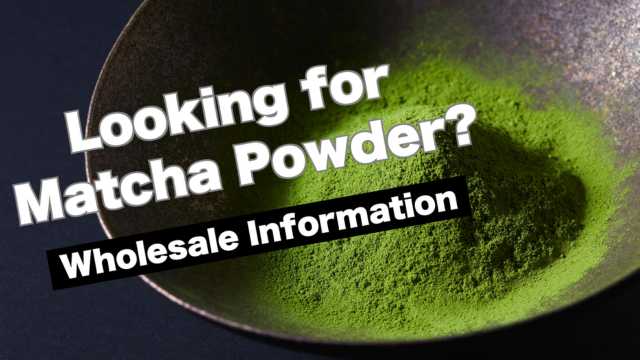
We source matcha from Japan’s premier production regions including Kyoto Uji, Kagoshima, Fukuoka, and Shizuoka, offering comprehensive grade ranges from organic JAS-certified ceremonial grade to processing-grade matcha.
Common Challenges:
- “We have projects but cannot secure stable matcha supply…”
- “We want to incorporate matcha into new café menu items!”
If you face these concerns, consult with Matcha Times. Feel free to contact us for initial inquiries.
\Read Also/
Key Takeaways
- A monthly guarantee is built from an annual allocation, buffer stock and grade design across harvests — ask how the commitment is secured, not just how large the supplier’s stated capacity is.
- For the GCC, halal is a sourcing requirement, not an add-on: confirm the certificate is recognised under the GSO 2055 halal food standard and by ESMA/MOIAT (UAE) or the SFDA (Saudi Arabia) before the first shipment.
- There is no single MOQ or price: grade, packaging, certification and volume move both, so get MOQ, lead time, incoterms and price quoted together in writing for your exact spec.
- Not every halal certificate clears every market — map the Japanese certifier to the correct GCC scheme (GSO 2055 / ESMA-MOIAT / SFDA / GAC), a step where buyers most often go wrong.
- Tea, including matcha, sits under HS heading 0902; confirm the current UAE/Saudi line-level duty and registration with a customs broker rather than assuming one figure.
Researched and reviewed by the Matcha Times Editorial Team, operated by the Japan Matcha Export Organization (JMEX). See our Editorial Policy and Sources & Methodology. Found an error? Tell us.
\Read More/
What guaranteeing 100-1,000 kg of halal matcha per month really requires
A credible monthly guarantee is an operations question before it is a sales one. Matcha is made from shade-grown tencha that is harvested seasonally and then stone-milled, so a supplier cannot conjure fresh volume on demand — it has to be planned against the harvest and reserved in advance. The difference between a reliable partner and a risky one is whether that reservation, plus a buffer, plus consistent grade, is written into your agreement.
When a supplier says it can “guarantee” your volume, the useful follow-up is how. The elements that turn a promise into a commitment are concrete:
- Annual allocation — volume reserved for you against the annual harvest, not sold first-come from open stock.
- Buffer stock — finished-matcha inventory held to cover demand spikes and the gap between harvests.
- Grade design and consistency — blending and milling that hold your color, flavour and particle size steady lot to lot, so month 9 matches month 1.
- Documentation continuity — halal certification maintained continuously (not a one-off), plus a per-lot COA so every shipment is verifiable.
- A written supply agreement — MOQ, monthly quantity, lead time, incoterms and price fixed in a supply agreement, with a named escalation path if a harvest underdelivers.
This is why a large advertised annual capacity alone does not answer the question. Reserved, certified, on-spec volume is what matters — a supplier can hold 2,000 tonnes a year and still fail your 300 kg in March if none of it was reserved for you, halal-certified, and milled to your grade. Judge the guarantee by the structure behind it.
Order scale: 100, 300, 500 and 1,000 kg per month
Your monthly volume changes which supplier structure fits and how MOQ, price and lead time behave. The bands below are illustrative order sizes, not quoted minimums — confirm the exact figures for your spec in writing. As a rule, larger committed volume improves unit economics and unlocks grade design, while small or one-off orders pay a premium and get less origin control.
| Monthly volume | Typical GCC buyer | Supplier structure that fits | What to secure in writing |
|---|---|---|---|
| ~100 kg/month | Growing cafe/QSR group, launching private label | Distributor with regional stock, or Japan-direct with consolidation | Halal recognition, per-lot COA, and consistency between sample and first bulk lot |
| ~300 kg/month | Multi-site chain, mid-size OEM or RTD line | Japan-direct processor or export organization | Annual allocation, lead time as volume rises, and grade stability across lots |
| ~500 kg/month | Manufacturer, supplement/protein brand | Export organization with grade design and buffer stock | Buffer-stock commitment, halal continuity, and a documented supply schedule |
| ~1,000 kg/month | Large manufacturer or regional distributor | Export organization with reserved annual allocation | Written supply agreement, allocation vs harvest, and an escalation clause |
Two channels serve these bands. A regional distributor (some hold stock in the UAE) offers shorter lead times and smaller minimums at a higher unit cost and with less control over origin and grade. Japan-direct sourcing from a Japanese processor or export organization gives control over origin, grade, halal continuity and documentation and better unit economics at volume, in exchange for a supply agreement and managing import with the exporter’s support.
What moves wholesale price and MOQ
Because there is no single GCC price, it is more useful to understand the factors that move a quote than to chase a headline number. The same factors usually move both the minimum order and the unit price:
- Grade and application — ceremonial-style grades cost more and often carry higher minimums than culinary or ingredient grades used in lattes, baking and RTD.
- Packaging and labeling — bulk foodservice packs differ from retail tins or private-label sachets; custom packaging and Arabic/English labeling raise both cost and MOQ.
- Certification — halal (to a GCC-recognised scheme), JAS organic and food-safety certifications add verification steps and can raise the minimum, but are often non-negotiable for GCC market access.
- Volume and commitment — larger, committed or recurring volume typically improves the unit price and unlocks grade design, while a one-off trial pays a premium.
- Logistics and incoterms — incoterms (EXW/FOB/CIF), freight mode, duty and local compliance all sit between the quoted unit price and your true landed cost.
Two disciplines protect margin. First, quote on landed cost: compare landed cost, not the ex-works unit price, because freight, duty, halal and labeling can change the ranking between a regional distributor and a Japan-direct order. Second, manage inventory and cash flow: match order size to real turnover so cash is not tied up in slow stock, and remember matcha is perishable — oversized lots lose color and flavour before they sell.
The UAE and Saudi Arabia halal and import path
In the GCC, halal and import compliance are one decision, so confirm a supplier can support the import layer before you commit volume. Matcha itself is a plant product with no animal ingredients, but a halal certificate is what buyers and authorities ask for: certification confirms no non-halal processing aids or cross-contamination and is increasingly expected for retail and foodservice positioning. The table summarises the core path; verify the current detail with each authority or a licensed customs broker before shipping.
| Layer | UAE | Saudi Arabia | What to confirm |
|---|---|---|---|
| Halal standard | GSO 2055 halal food standard via ESMA / MOIAT | GSO 2055, administered by the SFDA | The certificate is issued by a body recognised in your destination market |
| Certifier recognition | MOIAT-recognised halal bodies | SFDA accepts many international bodies | Which Japanese certifier maps to your scheme — not every halal cert clears every market |
| GCC harmonisation | GAC unified accreditation | GAC unified accreditation | Whether the cert aligns with GSO 2055 for GCC-wide acceptance |
| Food import & labeling | Product registration + Arabic/English label | SFDA registration + Arabic/English label | Correct labeling, ingredient and cross-contamination disclosure |
| Customs classification | Tea under HS heading 0902 | Tea under HS heading 0902 | Precise invoice wording (“matcha green tea powder”, grade) and current line-level duty |
On duty, tea (including matcha) is classified under HS heading 0902 (Japan Customs / Harmonized System), and the GCC applies a common external tariff with national administration; confirm the current line-level rate and documentary conditions with a customs broker rather than assuming a single figure. On invoicing, avoid a generic “tea powder” description — state “matcha green tea powder”, with the grade where applicable, so classification and halal review are not delayed.
For market context — not a matcha-specific figure — official Japan MAFF / Ministry of Finance trade data put Japan’s green tea exports (all forms combined, not matcha only) at roughly ¥36.4 billion and 8,798 tonnes in 2024. Read value and volume separately and never treat the green-tea total as a matcha-only number; matcha is one part of that green-tea export flow.
How to test any halal matcha supplier’s guarantee
Rather than ranking brands, evaluate any supplier — a GCC distributor or a Japan-direct exporter — against the same verifiable criteria. Use the checklist to compare candidates on facts you can confirm, not on marketing claims, and apply it equally to every option including JMEX.
| Criterion | What to verify with any supplier |
|---|---|
| Origin & grade | Confirmed Japanese origin, named region and, ideally, cultivar and harvest — and a grade matched to your product |
| Halal recognition | A current certificate recognised under GSO 2055 and by ESMA/MOIAT (UAE) or the SFDA (Saudi Arabia); ask which certifier and scheme |
| Per-lot COA & testing | Sensory, microbiological, pesticide and heavy-metal (lead, cadmium, arsenic) results from an accredited (ISO 17025) lab, per lot |
| Monthly guarantee structure | Annual allocation, buffer stock and a written escalation path if a harvest underdelivers — not just a large capacity figure |
| Supply stability | Ability to scale from a trial lot to a steady 100-1,000 kg/month without grade drift |
| Import documentation | Support for UAE/Saudi registration, Arabic/English labeling, HS 0902 invoicing and cross-contamination disclosure |
| Batch consistency | How color, flavour and particle size are held stable across repeat production |
| Commercial terms | MOQ, lead time, incoterms (FOB/CIF) and price quoted together in writing for your exact spec |
The most useful questions to ask a supplier are concrete: How is my monthly volume reserved against the harvest, and what buffer stock backs it? Which halal body issued your certificate, and is it recognised by ESMA/MOIAT or the SFDA? Can I see the COA for the exact lot I would receive, and confirm the Japanese region and cultivar? What is the MOQ, lead time and incoterm for my spec? Suppliers who answer precisely — and put the answers in a supply agreement — are the ones worth scaling with.
Sourcing steps: from trial lot to a monthly supply agreement
A disciplined process turns a good sample into a reliable monthly program. A practical order flow for a GCC buyer sourcing halal Japanese matcha runs as follows:
- Define the written specification — application, grade target, monthly volume (e.g. 100/300/500/1,000 kg), packaging and the GCC market(s) you will sell into.
- Shortlist suppliers by structure (regional distributor vs Japan-direct processor or export organization) against your volume and halal needs.
- Request a sample matched to your exact spec and a per-lot COA, and confirm Japanese origin plus halal, organic and food-safety certifications up front.
- Validate the sample in your actual product or on your line, and check the COA numbers against your requirements.
- Confirm the GCC compliance path — halal recognition (GSO 2055 / ESMA-MOIAT / SFDA), registration, Arabic/English labeling and HS 0902 invoicing — with the supplier and a customs broker.
- Place a small trial order, then agree the monthly quantity, annual allocation, buffer stock, MOQ, lead time, incoterms and price in a written supply agreement.
- Scale to the recurring monthly commitment once quality, consistency and documentation are proven across lots.
Avoid the recurring mistakes: trusting a large advertised capacity instead of a reserved allocation, treating all “matcha” as equal regardless of origin, assuming any halal certificate clears every GCC market, comparing ex-works prices instead of landed cost, and ordering more than your turnover can sell before the powder loses color and flavour.
Sources & Methodology
This guide synthesises official GCC halal and food-import authorities and Japanese trade and customs sources. Each source below states what it supports, its date, and its scope; all figures are external primary or official sources, and no unverified number is presented as fact. Regulatory detail changes, so confirm the current requirement with the named authority or a licensed customs broker before shipping.
- GSO — Gulf Standardization Organization — GSO 2055 halal food standard and GCC-wide harmonisation framework — accessed 2026 GCC halal food standard
- UAE MOIAT (formerly ESMA) — halal & standards — UAE halal certification recognition and food-import/standards framework — accessed 2026 UAE halal & import
- Saudi Food & Drug Authority (SFDA) — Saudi food-import registration and halal certificate recognition — accessed 2026 Saudi Arabia food import & halal
- GAC — Gulf Accreditation Center — Unified GCC accreditation scheme for conformity/halal bodies — accessed 2026 GCC accreditation
- USDA FAS — food & agricultural import regulations (GCC) — Food-import and halal regulatory context across GCC markets — accessed 2026 GCC food import
- Japan Customs (English) — Tea tariff classification under HS heading 0902 (Harmonized System) — accessed 2026 HS classification / customs
- Japan MAFF / Ministry of Finance — tea export statistics — Japan green-tea export value/volume 2024 (green-tea TOTAL, not matcha-only) — 2024 Japan green tea exports
Why Buyers Choose JMEX (Japan Matcha Export Organization)

One supplier that meets these criteria at a high level is JMEX (Japan Matcha Export Organization), a wholesale and export partner dedicated to bringing Japanese matcha overseas. It designs origin selection, quality assurance, export documentation, and logistics as one continuous flow, built for export from the start.
With a track record of exports to 43 countries, JMEX bridges Japanese origin and the GCC buyer on the export side: confirmed Japanese origin and grade design for your application and market, per-lot COA, MRL and heavy-metal testing, organic (JAS) and halal certification support recognised in GCC markets, Arabic/English labeling and export/origin documentation for UAE (ESMA/MOIAT) and Saudi (SFDA) registration, and stable recurring supply from 10 kg to 1 t per month — reserved against the harvest with buffer stock — for importers, wholesalers, OEM and health and wellness brands across the GCC.
Frequently Asked Questions
Common questions from UAE and Saudi buyers sourcing halal Japanese matcha wholesale, from monthly guarantees and MOQ to halal recognition and import duty.
Can a supplier really guarantee 100-1,000 kg of halal matcha per month?
A capable Japanese exporter can, but only if the commitment is engineered: an annual allocation reserved against the harvest, a buffer stock, grade design that holds your spec across seasons, and a written supply agreement with an escalation path. A large advertised annual capacity alone does not guarantee your specific monthly volume — ask how the reservation and buffer are structured.
Is matcha halal, and does it need certification to sell in the UAE and Saudi Arabia?
Matcha is a plant product with no animal ingredients, so it is inherently suitable, but GCC buyers and authorities increasingly expect a halal certificate confirming no non-halal processing aids or cross-contamination. Confirm the certificate is recognised under the GSO 2055 halal food standard and by ESMA/MOIAT (UAE) or the SFDA (Saudi Arabia) before your first shipment.
What halal standard applies to food imports in the GCC?
The GSO 2055 halal food standard, set by the Gulf Standardization Organization, is the common reference across GCC states. In the UAE it is administered via ESMA/MOIAT; in Saudi Arabia the SFDA runs registration and accepts many recognised international bodies; the GAC provides unified accreditation. Verify which Japanese certifier is recognised for your destination market.
What is the MOQ for wholesale halal matcha?
There is no single MOQ. It varies by supplier, grade, packaging and certification, and is usually discussed in bands rather than one fixed figure. Ask each supplier for their minimum for your exact spec, quoted in writing alongside monthly quantity, lead time, incoterms and price, rather than assuming a number from a website.
Is there import duty on matcha in the UAE and Saudi Arabia?
Tea, including matcha, is classified under HS heading 0902, and the GCC applies a common external tariff with national administration. Rates and documentary conditions can change, so confirm the current line-level duty and registration requirements with a licensed customs broker rather than assuming a single figure.
How do I verify a supplier’s Japanese origin and halal certification before a bulk order?
Ask for a per-lot certificate of analysis from an accredited (ISO 17025) laboratory covering sensory, microbiological and pesticide/heavy-metal results, plus confirmed Japanese origin with a named region and, ideally, cultivar. For halal, ask which body issued the certificate and confirm it is recognised by ESMA/MOIAT or the SFDA. Validate a sample in your actual product and place a small trial order before committing to a monthly schedule.
Learn More About Global Matcha Trends at Matcha Times

Matcha Times is a specialist media platform covering the global matcha market — sourcing and wholesale, supply and pricing, trade and regulations, production and origins, and the companies shaping the industry.
From market analysis and price trends to café case studies and interviews with tea farmers, we help buyers, importers, distributors, and manufacturers stay ahead of where matcha is heading. Explore more and put the global matcha market to work for your business.
Conclusion
A 100-1,000 kg monthly guarantee for halal matcha is credible only when it is engineered: volume reserved against the harvest, a buffer stock, consistent grade, continuous halal certification recognised in your GCC market, and a written supply agreement. Understand the factors that move MOQ and price, quote on landed cost, map the halal certificate to the correct GSO 2055 / ESMA-MOIAT / SFDA scheme, and evaluate every supplier against the same neutral checklist before you scale. JMEX supports UAE and Saudi buyers across exactly these steps, from origin and grade design to certification and export documentation.
Looking for wholesale or OEM matcha samples? Contact us — we will recommend the optimal origin and grade based on your application and target markets.
Related Articles