Matcha Wholesale from Japan: Complete B2B Buyer’s Guide 2026
Matcha wholesale means buying Japanese stone-milled green tea powder in bulk — typically from a few kilograms per order up to recurring monthly volumes — for resale, foodservice, retail packing, or use as an ingredient in manufacturing. For a B2B buyer the decision comes down to four things: the grade you actually need, the minimum order quantity (MOQ), how landed cost and documentation stack up, and how well a supplier can prove quality and origin lot after lot. This guide explains the wholesale opportunity, the demand behind it, how grade and volume shape pricing and MOQ, a channel map for foodservice, retail and OEM, the real sourcing risks and how to de-risk them, a supplier checklist you can apply to anyone (including JMEX), and how JMEX supports importers on the export side — with prices and order quantities treated as quotation items to confirm, never invented.
For Companies Seeking Matcha Powder
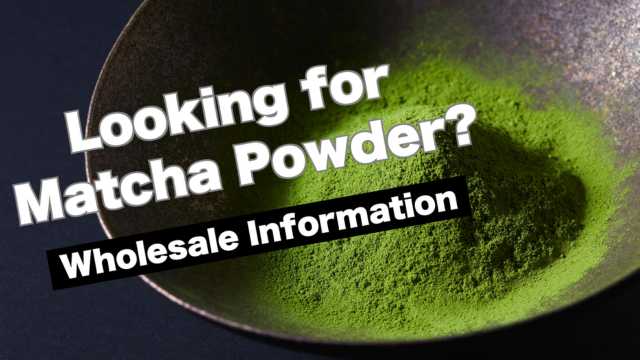
We source matcha from Japan’s premier production regions including Kyoto Uji, Kagoshima, Fukuoka, and Shizuoka, offering comprehensive grade ranges from organic JAS-certified ceremonial grade to processing-grade matcha.
Common Challenges:
- “We have projects but cannot secure stable matcha supply…”
- “We want to incorporate matcha into new café menu items!”
If you face these concerns, consult with Matcha Times. Feel free to contact us for initial inquiries.
\Read Also/
Key Takeaways
- Match the grade to the application first: culinary/ingredient grade for baking and blends, latte/premium for cafe drinks, ceremonial for straight-whisked service. Grade — not brand — drives cost.
- Treat every price and MOQ as a quotation item tied to a trade condition (FOB/CIF/EXW), grade and volume. Published ranges disagree source to source; get a current written quote before you budget.
- Qualified Japan-direct exporters now support flexible volumes — samples through recurring bulk — so you rarely need a huge first order. Scale from a trial lot beats one large speculative purchase.
- The real de-risking lever is export-side quality and documentation: a per-lot certificate of analysis (COA), pesticide/heavy-metal testing, named origin and grade design — not a low headline price.
- Duty depends on the destination: in the US, green tea (HS 0902) is duty-free at the base rate, but separate, time-varying country measures can apply — verify the current landed cost per market.
Researched and reviewed by the Matcha Times Editorial Team, operated by the Japan Matcha Export Organization (JMEX). Last reviewed: 2026-09-27. See our Editorial Policy and Sources & Methodology. Found an error? Tell us.
\Read More/
What matcha wholesale is, and who buys it
Wholesale matcha is the same product as retail matcha — shade-grown Japanese green tea leaves (tencha) stone-milled into fine powder — sold in bulk, business-to-business, at a per-kilogram price rather than in consumer tins. The buyer is not a home drinker; it is an organisation that converts the powder into something it sells. That distinction matters, because a wholesale buyer cares about consistency, documentation and supply security far more than a consumer shopping for one tin.
In practice, wholesale matcha buyers fall into a few recognisable types, and the right grade, volume and packaging follow from which one you are:
- Foodservice — cafes, chains, hotels and restaurants serving lattes and desserts. They need reliable colour and flavour in milk, and predictable cost per serving.
- Retail & CPG — brands and distributors packing matcha into tins, sachets or blends for shelves and e-commerce. They need consistent lots, labeling data and a stable supply story.
- OEM & private label — contract manufacturers and private-label brands building matcha into finished products. They need specification control, COA and grade design.
- Manufacturing — makers of ready-to-drink beverages, protein and wellness products, confectionery and bakery, where dispersion, colour stability and food-safety documentation are decisive.
Demand drivers behind wholesale matcha
Matcha demand has broadened from tea ceremony into everyday foodservice, packaged goods and manufacturing across many markets, and Japanese green tea exports reflect that pull. According to Japan’s Ministry of Finance Trade Statistics (Japan Customs), Japan exported roughly ¥36.4 billion / 8,798 tonnes of green tea in 2024. That figure is the green-tea total by value and volume — the total for all green tea forms combined, not matcha alone — so read it as a directional signal of export momentum, not a matcha-specific number.
Beyond the headline, three structural drivers keep wholesale interest high. First, application spread: matcha now appears in lattes, RTD drinks, baking, confectionery and supplements, multiplying the buyer base. Second, origin and quality expectations are rising: buyers increasingly want a documented Japanese origin rather than an unnamed “green powder.” Third, supply reliability has become a buying criterion: brands and manufacturers plan around recurring monthly volume, which favours suppliers who can hold grade and quantity stable over time. Commercial market-research firms also publish global matcha market-size estimates, but these vary widely by provider and definition, so we treat them as indicative only rather than citing a single figure as fact.
Matcha grades and how grade maps to application and cost
The single most useful thing a wholesale buyer can do is buy the right grade for the job, not the most prestigious one. Grade is a spectrum, not a legal standard, so terminology varies between suppliers — but the practical mapping of grade to application and relative cost is consistent. Use the table below to match grade to use before you compare any quotes.
| Grade tier | Typical use | What defines it | Relative cost |
|---|---|---|---|
| Culinary / ingredient | Baking, ice cream, confectionery, blends, supplements | Later-harvest leaves; robust, slightly astringent; holds colour and flavour in recipes | Lowest |
| Latte / premium culinary | Cafe lattes and iced drinks, RTD beverages | Smoother than culinary; balanced for milk and sweetness; good colour in drinks | Mid |
| Ceremonial | Whisked and served straight (usucha); premium retail tins | First-harvest, shade-grown, stone-milled; vivid jade colour, natural sweetness, umami | Highest |
Two practical rules follow. Paying for ceremonial grade to bake it into a muffin wastes margin; a premium culinary grade that holds colour under heat is the better-value choice. Conversely, an unusually cheap product sold as “ceremonial” is a red flag worth questioning: genuine ceremonial requires first-harvest leaves, weeks of shading, stone milling and hand-sorting, and that cost floor does not disappear.
How wholesale pricing and MOQ actually work
Buyers want a number, and every guide online offers one — but the ranges disagree wildly and are rarely tied to a trade condition. The honest, useful answer is that matcha wholesale pricing is a function of grade, volume and origin, and the way to protect your budget is to understand the levers, then request a written quote for your exact grade, volume and destination.
How wholesale matcha is priced
Per-kilogram price moves on a few predictable levers: grade (ceremonial costs several times more than culinary), order volume (larger, committed volumes earn better per-kg pricing), origin and cultivar, and the trade condition quoted — FOB is not CIF is not landed cost. Because those variables interact, a price with no grade, volume or FOB/CIF context attached is not comparable. Always ask a supplier to state the grade, the quantity the price applies to, and whether it is FOB, CIF or EXW, so you can compare like with like and model a true landed cost.
Minimum order quantity (MOQ) and how it scales
MOQ has fallen for buyers working with specialised Japan-direct exporters: samples and small trial lots are widely available, and recurring wholesale volume can be built up rather than committed to upfront. Very large trading houses and heritage makers may still set high minimums, so MOQ is itself a supplier-selection criterion. The lowest-risk path is to request a sample with its COA, confirm colour, flavour, dispersion and documentation, place a modest first order, then scale to a monthly volume once the lot performs.
Channel map: foodservice, retail and OEM
Wholesale matcha reaches end customers through distinct channels, and each one rewards a different grade, packaging and supply cadence. Knowing which channel you serve tells you what to ask a supplier for — and where your margin actually comes from.
| Channel | Typical buyer | Grade emphasis | What matters most |
|---|---|---|---|
| Foodservice | Cafes, chains, hotels, restaurants | Latte / premium culinary | Colour and flavour in milk; predictable cost per serving; steady resupply |
| Retail & CPG | Packers, brands, distributors | Ceremonial and premium culinary | Lot consistency; labeling and nutrition data; a credible origin story |
| OEM / private label | Contract manufacturers, own-brand launchers | Designed to spec | Specification control, per-lot COA, grade design, packaging flexibility |
| Manufacturing / RTD | Beverage, protein, bakery, confectionery makers | Culinary / ingredient | Dispersion, colour and heat stability, microbiological specs, batch consistency |
Sourcing risks and how B2B buyers de-risk them
Most wholesale matcha problems are avoidable and repeat across buyers. The recurring risks — and the concrete way to neutralise each one:
- Mislabeled grade — a cheap “ceremonial” that is really culinary. De-risk by tasting a sample, checking colour, and asking for harvest, cultivation and milling details in writing.
- Inconsistent lots — colour and flavour drifting between lots. De-risk by requiring a per-lot COA and testing batch consistency before scaling volume.
- Weak documentation — no residue or heavy-metal testing, no traceable origin. De-risk by requiring pesticide/MRL and heavy-metal results from an accredited (ISO 17025) laboratory and a certificate of origin.
- Landed-cost surprises — assuming a price is landed cost. De-risk by confirming the trade condition and modelling freight, insurance and destination duty before you commit.
- Supply instability — a supplier who cannot hold quantity or grade. De-risk by confirming monthly capacity and lead time in writing before you build a product around them.
On duty specifically, the treatment varies by destination and should be verified, not assumed. In the United States, green tea (including matcha) is classified under HS heading 0902 and carries a 0% duty (duty-free) at the base (MFN) rate, per the USITC Harmonized Tariff Schedule. Separately, country-level “reciprocal” trade measures introduced in 2024–25 can apply on top and change over time, so confirm the current treatment with a licensed customs broker; other markets (EU, UK, Gulf, APAC) each set their own rate. Also plan for destination food-safety rules — in the US, importers work under FDA food-import requirements (FDA), including FSVP.
How to evaluate a matcha wholesale supplier
Rather than ranking brands, evaluate any supplier — a domestic distributor or a Japan-direct exporter — against the same verifiable criteria. The right partner reduces your risk by producing the evidence a serious buyer needs, order after order. Use this checklist to compare on facts you can verify, not marketing claims.
| Criterion | What to verify with any supplier |
|---|---|
| Grade & specification | A written spec (harvest, cultivation, milling, colour, taste) — not just a grade name |
| Per-lot COA & testing | Sensory, microbiological, pesticide/MRL and heavy-metal results from an accredited (ISO 17025) laboratory |
| Origin evidence | Named Japanese region and a certificate of origin — not just “Japanese matcha” |
| MOQ & sample policy | Sample availability and a realistic first-order minimum that lets you trial before scaling |
| Pricing transparency | Price stated with grade, volume and trade condition (FOB/CIF/EXW), not a bare per-kg figure |
| Batch consistency | Colour, flavour and particle size held stable across repeat production |
| Supply & lead time | Confirmed monthly capacity and lead time from trial lot to recurring volume |
| Documentation & certification | Export documents, and organic/Halal certification available when a buyer or market requires it |
A fast way to pressure-test a partner is to request a sample with its full COA and specification together, then place a small trial order before committing to recurring volume. Suppliers who answer grade, testing, origin and supply questions precisely — and put them in writing — are the ones worth scaling with.
Sources & Methodology
This guide synthesises official Japanese trade statistics and destination-market customs and food-safety sources with practical B2B sourcing experience. Each source below states what it supports, its date and its scope. Pricing and MOQ are presented qualitatively and as quotation items: no per-kilogram price or minimum order figure is stated as fact, because such numbers depend on grade, volume, origin and trade condition and must be confirmed by a current quote. The Japan export figure is green-tea total (all forms), not matcha-only, and is labeled as such.
- Japan Ministry of Finance Trade Statistics (Japan Customs) — Japan green-tea export value and volume in 2024 (green-tea TOTAL, all forms, not matcha-only) — 2024 Japan green tea exports
- Japan Ministry of Agriculture, Forestry and Fisheries (MAFF) — Japanese tea production and export context for demand framing — accessed 2026 Japan tea sector
- USITC Harmonized Tariff Schedule — US classification of green tea/matcha under HS heading 0902 and the duty-free base (MFN) rate — accessed 2026 US import tariff
- U.S. Food & Drug Administration — Importing Food Products — US food-import framework for matcha (including FSVP obligations on importers) — accessed 2026 US food import
- USDA National Organic Program — US organic certification framework relevant to organic matcha claims — accessed 2026 US organic
Why Buyers Choose JMEX (Japan Matcha Export Organization)

One supplier that meets these criteria at a high level is JMEX (Japan Matcha Export Organization), a wholesale and export partner dedicated to bringing Japanese matcha overseas. It designs origin selection, quality assurance, export documentation, and logistics as one continuous flow, built for export from the start.
With a track record of exports to 43 countries, JMEX handles the export side that decides whether a wholesale programme succeeds: origin selection and grade design to your specification, per-lot COA, pesticide/MRL and heavy-metal testing, organic (JAS) and Halal certification support, certificate of origin and export documentation, and stable recurring supply from roughly 10 kg to 1 tonne per month for importers, wholesalers, private-label brands and manufacturers. You deal with one accountable Japanese exporter, from sample and trial lot through to an annual supply plan.
Frequently Asked Questions
Common questions from importers, distributors and B2B buyers evaluating matcha wholesale — from pricing and MOQ to grades, direct sourcing and duty.
How much does wholesale matcha cost per kg?
It depends on grade, order volume, origin and the trade condition quoted (FOB/CIF/EXW). Ceremonial grade costs several times more per kg than culinary, and larger committed volumes earn better pricing. Because published ranges disagree and are rarely tied to a trade condition, treat any number as indicative and request a current written quote for your exact grade, quantity and destination before budgeting.
What is the minimum order quantity (MOQ) for wholesale matcha?
MOQ varies by supplier type. Specialised Japan-direct exporters typically offer samples and small trial lots and let you scale to recurring volume, while large trading houses and heritage makers may set high minimums. The lowest-risk approach is to request a sample with its COA, place a modest first order to confirm the lot, then scale to a monthly volume — so treat MOQ as a supplier-selection criterion, not a fixed rule.
What is the difference between ceremonial and culinary matcha for wholesale buyers?
Ceremonial grade is made from first-harvest, shade-grown leaves that are stone-milled to a fine, vivid-green powder for whisking and drinking straight. Culinary/ingredient grade uses later-harvest leaves with a more robust flavour designed to hold colour and taste in recipes, lattes and blends. For most foodservice and manufacturing uses a latte or premium culinary grade is the better-value choice; buy the grade the application needs rather than the most prestigious one.
How do I buy matcha wholesale directly from Japan?
Define your grade and specification, request samples with a per-lot COA, confirm origin, testing, MOQ, pricing (with a trade condition) and lead time in writing, then place a trial order before committing to recurring volume. A Japan-based export partner can handle origin selection, grade design, documentation and logistics so you deal with one accountable exporter rather than assembling the chain yourself.
Do I pay import duty on wholesale matcha?
It depends on the destination. In the United States, green tea (including matcha) is classified under HS heading 0902 and is duty-free at the base (MFN) rate per the USITC tariff schedule; however, separate country-level reciprocal measures introduced in 2024–25 can apply and change over time, so confirm the current treatment with a licensed customs broker. Other markets (EU, UK, Gulf, APAC) set their own rates — verify the landed cost for each market you ship to.
How can I tell a reliable matcha wholesale supplier from a risky one?
A reliable supplier provides a written specification, a per-lot COA with accredited pesticide/heavy-metal and microbiological testing, named Japanese origin with a certificate of origin, transparent pricing tied to grade and trade condition, and confirmed monthly capacity and lead time. Vague answers, a bare per-kg price with no context, or an implausibly cheap “ceremonial” grade are warning signs. Pressure-test with a sample and its full document pack before scaling.
Learn More About Global Matcha Trends at Matcha Times

Matcha Times is a specialist media platform covering the global matcha market — sourcing and wholesale, supply and pricing, trade and regulations, production and origins, and the companies shaping the industry.
From market analysis and price trends to café case studies and interviews with tea farmers, we help buyers, importers, distributors, and manufacturers stay ahead of where matcha is heading. Explore more and put the global matcha market to work for your business.
Conclusion
Sourcing matcha wholesale from Japan is very achievable once you separate the decision into its real parts: buy the grade the application needs, treat every price and MOQ as a quotation item tied to a trade condition, map your channel, and judge suppliers on verifiable quality and documentation rather than a headline price. Verify duty and food-safety rules for each destination instead of assuming them, and always pressure-test a partner with a sample and its full COA before scaling to recurring volume. JMEX supports overseas importers, wholesalers and manufacturers across exactly these export-side steps.
Looking for wholesale or OEM matcha samples? Contact us — we will recommend the optimal origin and grade based on your application and target markets.
Related Articles