Matcha in South Africa: Market, Culture, and Opportunities
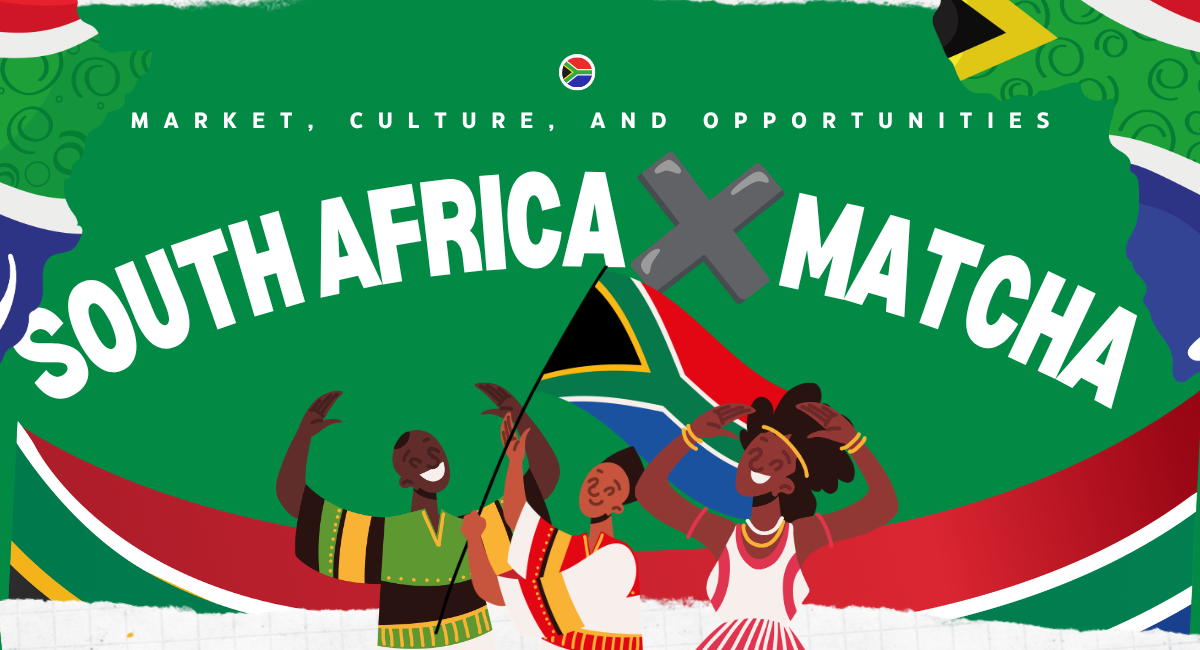
As matcha continues its global rise, a fair question follows: is matcha actually consumed in Africa?
The short answer is yes — and South Africa is the market to watch. While still small in absolute terms, South Africa’s matcha market is expanding steadily, carried by the country’s growing health-and-wellness culture rather than by any deep familiarity with Japanese tea tradition.
This article unpacks the state of matcha in South Africa through five lenses: the market today, where matcha is consumed, distribution and quality realities, the brand value of Japanese matcha, and the opportunities ahead.
For Companies Seeking Matcha Powder
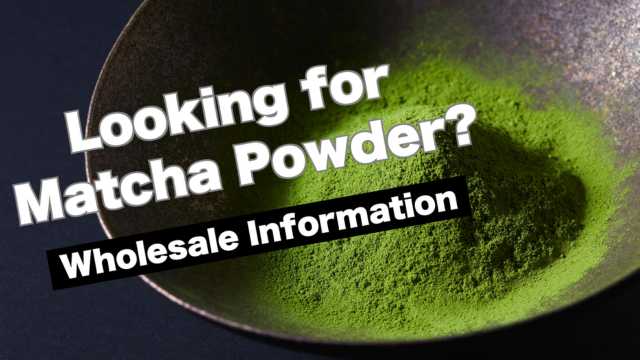
We source matcha from Japan’s premier production regions including Kyoto Uji, Kagoshima, Fukuoka, and Shizuoka, offering comprehensive grade ranges from organic JAS-certified ceremonial grade to processing-grade matcha.
Common Challenges:
- “We have projects but cannot secure stable matcha supply…”
- “We want to incorporate matcha into new café menu items!”
If you face these concerns, consult with Matcha Times. Feel free to contact us for initial inquiries.
Why interest in matcha is rising in South Africa
Two forces are driving matcha’s emergence in South Africa: a rising health consciousness and the inflow of food trends from Europe and North America.
South Africa has traditionally been a coffee-and-tea country (with rooibos and black tea as staples). But in recent years, urban centres — especially Cape Town and Johannesburg — have seen rapid growth in demand for organic foods and “superfoods,” alongside expanding vegan, vegetarian and gluten-free communities.
Within that shift, matcha lands naturally. Its associations — high in antioxidants, supports focus and calm energy, enjoyable without added sugar — position it cleanly as a wellness beverage. The nuance worth noting is that South African demand is rooted less in admiration for Japanese culture and more in a broader wellness-lifestyle movement. Matcha is being adopted as part of how health-conscious consumers want to live, eat and drink.
Where matcha is consumed in South Africa
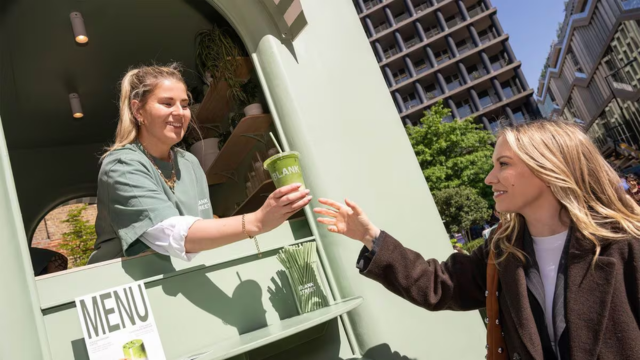
Mapping where matcha appears tells you a lot about the market’s maturity. For now, matcha is not an everyday drink — it’s a considered indulgence concentrated among specific consumers and venues.
Urban cafés and organic stores
Matcha is most visible in city cafés and organic/health-food retailers, with Cape Town leading the way. Typical menu items include:
- Matcha lattes
- Matcha smoothies
- Matcha-based protein drinks
Dedicated specialty venues are emerging (Cape Town’s matcha bars are a case in point), and mainstream retail has followed — major grocers such as Woolworths now stock instant matcha lattes and matcha capsules on shelf. A café cup typically runs around R60–75, broadly comparable to Japanese pricing.
In these settings, matcha is most often framed as a coffee alternative or a lower-caffeine option, and it has firmly established itself as a “conscious” drink.
A strong fit with vegan and wellness communities
The backbone of South Africa’s matcha demand is the vegan, yoga and fitness crowd. Matcha resonates with this audience because it:
- Pairs well with plant-based drinks
- Delivers natural flavour without sugar
- Connects easily to themes of mindfulness and focus
Add social media to the mix — the “calm energy” and soft-life aesthetic that travels so well on TikTok and Instagram — and matcha becomes not just a beverage but a lifestyle signal, particularly for younger, digitally native consumers.
Distribution and quality: the reality on the ground

Alongside the momentum sits a clear challenge. Put plainly: much of what is sold as “matcha” in South Africa would not be considered matcha by Japanese standards.
A large share of products on the market are:
- Chinese-origin green tea powder
- Generic green tea powder
- “Matcha-flavoured” products
The defining Japanese method — shade-grown tencha, stone-milled into a fine powder — is still not widely understood locally. As a result, it’s common to find products that are yellowish in colour or excessively bitter, with a flavour profile far from authentic matcha.
There’s also a price barrier: genuine Japanese matcha carries high import costs, which pushes retail prices up and keeps it out of reach for the average consumer. (Global supply pressure on authentic Japanese matcha is compounding this, lifting prices further.)
The brand value of Japanese matcha in South Africa
Despite those hurdles, Japanese matcha enjoys remarkably strong brand equity in South Africa.
Labels such as “Japanese,” “Organic,” and “Ceremonial Grade” carry real persuasive power, backed by the wider reputation of Japanese products for:
- High safety standards
- Trusted quality
- A clear, credible origin story
In practice, premium organic stores and select cafés deliberately position Japanese matcha at the high end — and win loyal, quality-focused customers precisely because of it. The lesson is that South Africa offers fertile ground for matcha sold as “the product chosen by those who know,” rather than as a volume commodity.
The future potential of South Africa’s matcha market
South Africa is not going to be an explosive-growth market. But as a high-value, brand-oriented market, it holds genuine promise.
The numbers support a “small but climbing” picture. South Africa’s matcha market was estimated at roughly R169 million (about USD 8.9 million) in 2024, and is projected to roughly double to around R342 million (about USD 21.2 million) by 2033, growing at a compound annual rate of around 10%. Organic matcha is the fastest-growing segment, and South Africa is projected to lead the Middle East & Africa region in the years ahead.
Three factors are especially worth watching:
- Growth as a tourism destination
- An expanding affluent and middle class
- South Africa’s role as a distribution hub for the wider continent
South Africa is well placed to act as an import-and-distribution gateway across Africa. If matcha awareness deepens here, it can spill over into neighbouring markets. That makes education and storytelling — “what matcha actually is,” and “why Japanese origin matters” — the key lever for expansion.
Looking to source high-quality matcha powder? Let’s talk. Demand for matcha-based drinks, sweets and food products keeps climbing across cafés, patisseries, beverage makers and OEM/private-label lines. If you want to choose the right matcha for your specific use case, get in touch.
Learn More About Global Matcha Trends at Matcha Times

UK-spreading matcha booms result from overlapping health consciousness, Japanese culture popularity, and lifestyle transformations. However, matcha’s appeal and potential still lie ahead. Knowing latest trends across countries and Japanese tea region initiatives reveals matcha’s deeper dimensions.
Matcha Times broadly publishes from matcha market analysis to cafe situations and farmer interviews. Won’t you also take this opportunity to deeply explore matcha’s world? The more you know matcha, the more surely its charm will draw you in.
Conclusion: a market that grows on quality
Taken together, South Africa’s matcha story is one of a niche market with real long-term potential.
- The core is urban, wellness-oriented consumers
- Product quality across the market is uneven
- The brand power of Japanese matcha is high
That profile makes South Africa a quality-over-quantity matcha market — and a natural fit for Japanese producers. Where the right knowledge and the right value are communicated, Japanese matcha can take firm and lasting root in South Africa.
Recommended Articles
→ Global Matcha Market Analysis 2026: Market Size, Growth Trends, and Business Opportunities
→ Matcha Expiration Guide: How Long Does Matcha Last and Can You Use Expired Matcha?
→ The Matcha Supply Chain Anatomy: Understanding the 12-Layer Structure from Farm to Cup