The 3 Real Growth Drivers of Vietnam’s Matcha Market: Gen Z, Café Evolution, and the Wellness Wave
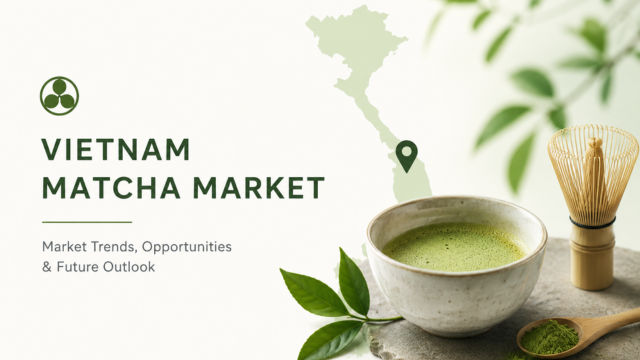
“Matcha is booming in Southeast Asia” — by 2026, that phrase has become almost a cliché in the global tea trade. What far fewer buyers have noticed is that one country in the region is on an entirely different growth curve from the rest: Vietnam. In this article, we break down Vietnam’s matcha market not by raw size, but by three structural forces: Gen Z demographics, the evolution of the local café industry, and the mainstreaming of wellness culture. These are the real growth drivers pushing Vietnam to the top of B2B buyers’ and OEM operators’ shortlists this year.
\For Companies Seeking Matcha Powder/
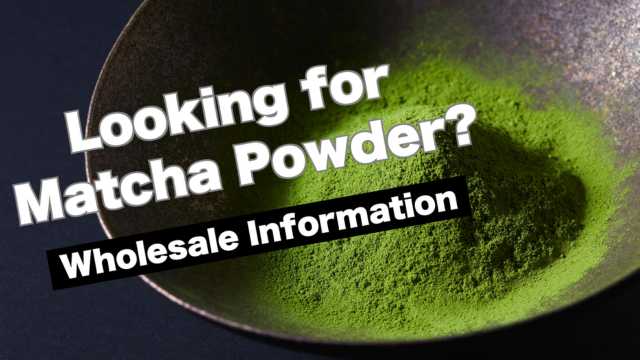
We source matcha from Japan’s premier production regions including Kyoto Uji, Kagoshima, Fukuoka, and Shizuoka, offering comprehensive grade ranges from organic JAS-certified ceremonial grade to processing-grade matcha.
Common Challenges:
- “We have projects but cannot secure stable matcha supply…”
- “We want to incorporate matcha into new café menu items!”
If you face these concerns, consult with Matcha Times. Feel free to contact us for initial inquiries.
\Read Also/
Why Vietnam’s Matcha Market Is Suddenly on Every Global Buyer’s Radar
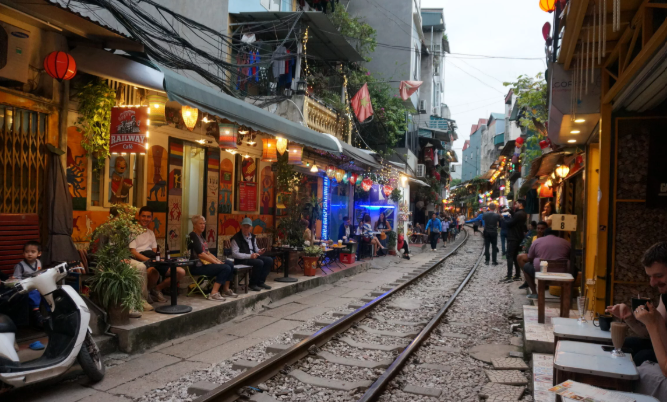
From 2024 through 2026, Vietnam’s matcha-related market is estimated to be expanding at more than 20% year-over-year [citation needed]. That figure outpaces Thailand, Singapore, and Indonesia — and sits well above the wider Southeast Asian average of roughly 10–15% [citation needed]. The drivers are easy to name: a rapid rise in urban disposable income in Ho Chi Minh City and Hanoi, an SNS-driven food culture, and a coffee-dominant café industry that is now seriously rolling out matcha menus across its biggest chains.
What makes Vietnam unusual is that two consumer waves are rising at the same time. There are still huge numbers of first-time matcha drinkers entering the category — and a fast-growing core that already drinks matcha as a daily habit. Mature markets like Japan, Korea, and Taiwan have largely shifted into the “which matcha do I prefer?” phase. Vietnam, by contrast, is in the rare moment of “the market itself is being built right now.” Whoever wins shelf and menu placement in this window will likely shape the next five years of market share.
Japan’s export figures from JETRO and the Ministry of Agriculture, Forestry and Fisheries (MAFF) show consecutive year-over-year increases in green tea and matcha shipments to Vietnam [citation needed]. From the Japanese supply side, Vietnam is increasingly described as “the next major battleground.” Matcha is folded into the broader “green tea” customs category, so the standalone number is hard to isolate — but interviews with Japanese trading firms and wholesalers consistently point to the same trend: strong demand for B2B matcha powder destined for cafés, patisseries, and functional food brands.
But Treating Vietnam as “Just Another Emerging Market” Will Cost You

Here is where many buyers fall into the first trap. The assumption goes: “It’s an emerging market, so the lowest price and highest volume should win.” Several operators who entered Vietnam in the past two or three years did exactly that — flooding the market with cheap “matcha-style” green tea powder from China — and saw early traction. From 2025 onward, however, most of those operators are struggling.
The reason is simple: Vietnamese Gen Z consumers are far more authenticity-driven than buyers expect. They use TikTok and Instagram to learn — at startling speed — the differences between Uji, Nishio, and Kagoshima origins, between ceremonial and culinary grades, and between vivid green and dull yellow-green powder. Quality debates that you might assume only happen among Japanese tea specialists are completely normal social-media content in Vietnam now. The “any green powder will sell” phase is already closing.
The result is a paradox: Vietnam is an emerging market with the quality literacy of a mid-tier market. Misreading that paradox is what kills brands here. Sell low quality early, take a hit on social media, and you may never recover the brand equity even after upgrading the product. Later entrants with better grades will take the share.
Growth Driver #1: Gen Z Demographics and Social Media Behavior

The single biggest engine behind Vietnam’s matcha market is demographic. Vietnam has a population of around 100 million, with a median age of roughly 32 — one of the youngest profiles in all of Southeast Asia [citation needed]. The Gen Z cohort (born 1997–2012) alone numbers around 20 million, and urban members of this group are quickly becoming a major discretionary-spending segment.
TikTok Is Quietly Building Vietnam’s Matcha Market
You cannot discuss Gen Z in Vietnam without discussing TikTok. Vietnam is one of TikTok’s top markets globally by active users, and for young consumers the platform’s influence on food and beverage choices far exceeds that of TV or print [citation needed]. Hashtags like #matcha, #matchalatte, and the Vietnamese-language #trasua_matcha (milk tea + matcha) collectively rack up tens of millions of views, and that vivid, photogenic green has become a full-on cultural icon rather than just a flavor.
“Made in Japan” Is a Massive Tailwind
The second thing not to underestimate is the extraordinary trust Vietnamese consumers place in “Made in Japan.” Across cosmetics, health food, baby products, and many other categories, Japanese origin is consistently read as a signal of safety and premium quality. Matcha rides that tailwind: “healthy and authentically Japanese” carries a double premium in the eyes of the consumer. The groundwork to charge real price differentials between genuine Japanese matcha and Chinese or domestic “matcha-style” powders is already in place.
\Read More/
Growth Driver #2: Café Industry Evolution and Shifts in Procurement

Vietnam is the world’s second-largest coffee exporter. So why is its café industry suddenly chasing matcha? The answer is the second structural driver: the rapid evolution of Vietnamese café formats.
Major Chains Are Making Matcha a Permanent Menu Item
Vietnam’s flagship café chains — Highlands Coffee, Phuc Long, Katinat Saigon Kafe, The Coffee House, Trung Nguyen — are all systematically adding matcha lattes, matcha frappés, and matcha cheese-foam teas to their permanent menus. This isn’t an experimental SKU; it’s a strategic move away from coffee-only positioning and toward higher ticket sizes and longer dwell time.
For a top-tier chain, the typical matcha purchase order ranges from 10 kg to several hundred kg per month of B2B-grade powder. The non-negotiables are usually three: consistent color, a bitterness profile that works in milk, and predictable cost. Whichever suppliers lock in these accounts now will dominate Vietnam’s commercial matcha channel for years to come.
Independent Cafés and Patisseries Want “Small Lot + Consistent Quality”
At the same time, Vietnam’s independent specialty cafés and patisseries are growing fast, and they want a very different profile: monthly orders of just 1–5 kg, but with vivid color, aromatic complexity, and storytelling around specific origins and producers. This segment skews toward ceremonial-grade or premium culinary powder. “Vietnam market” is really two markets — chain procurement and indie procurement — and they require very different grade, lot, and price strategies.
Growth Driver #3: Mainstream Wellness Culture and Functional Positioning
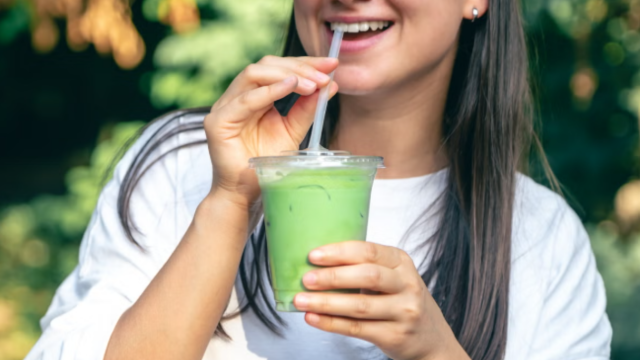
The third driver is the rapid mainstreaming of health and wellness culture in urban Vietnam. Post-pandemic, the market for protein bars, superfoods, and plant-based milks has grown sharply [citation needed]. Matcha slots neatly into that wave as a natural, plant-based, functional ingredient — a near-ideal fit for the wellness narrative consumers are buying into.
L-Theanine, Catechins, and “Calmer Caffeine” Are Becoming Common Knowledge
Vietnamese fitness influencers, nutritionists, and wellness creators on YouTube have started talking about L-theanine (the relaxation amino acid), catechins (antioxidants), and matcha’s slower caffeine release — explicitly framing matcha against coffee. The narrative of “coffee makes me jittery in the afternoon, but matcha keeps me calm and focused” is resonating strongly with young white-collar professionals.
Matcha Is Spreading Into Protein, Bakery, and Smoothie Categories
From a B2B angle, gym chains and wellness-positioned cafés in Ho Chi Minh City and Hanoi are launching matcha protein shakes, matcha energy balls, and matcha smoothie bowls. Because matcha is the headline ingredient (not a garnish), these formats burn through real volume and form a separate functional-food procurement channel distinct from straight café demand. This is its own market opportunity, and it deserves a dedicated grade and pricing strategy.
Where the Three Forces Intersect: Vietnam’s Real Growth Sweet Spot
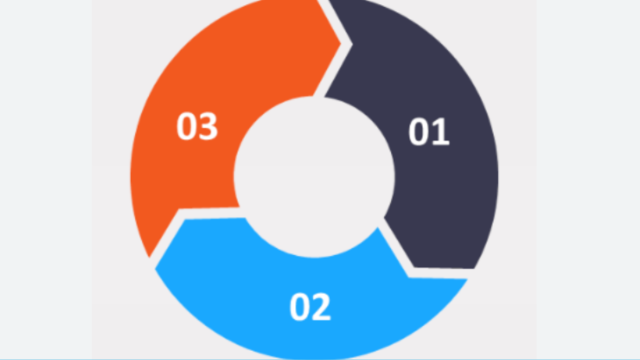
The most lucrative slice of Vietnam’s matcha market is exactly where the three drivers — Gen Z demographics, café evolution, and mainstream wellness — intersect at the same time. In plain terms: urban Gen Z customers, served photogenic matcha menus, framed within a health narrative, by cafés, patisseries, and wellness brands. This segment is set to expand explosively over the next three to five years.
The contrast with other Southeast Asian markets makes Vietnam’s uniqueness obvious:
| Country | Gen Z Scale | Café Format Evolution | Wellness Adoption | Matcha Tailwind |
|---|---|---|---|---|
| Vietnam | ◎ (urban concentration) | ◎ (chain + indie dual layer) | ○ (rapidly expanding) | ◎ (all three rising at once) |
| Thailand | ○ | ◎ (mature) | ◎ | ○ (near maturity) |
| Singapore | △ (small population) | ◎ | ◎ | △ (capped market size) |
| Indonesia | ◎ (largest scale) | ○ | ○ | ○ (Halal required) |
| Malaysia | ○ | ○ | ○ | ○ (Halal required) |
The pattern is clear: only Vietnam has all three forces rising simultaneously. Thailand and Singapore are already mature. Indonesia and Malaysia require Halal certification as a de facto market-entry condition, which adds upfront cost and lead time. Vietnam is the one market where the question is purely “can you put genuine Japanese matcha, at the right grade, into the market at the moment it is being formed?” The window is open — but only for buyers ready to move now.
Three Pitfalls That Trip Up Buyers Entering Vietnam

Plenty of buyers are drawn to Vietnam’s growth story and end up retreating or scaling down. The failure patterns cluster into three distinct pitfalls.
Pitfall #1: Choosing Origin and Grade on Price Alone
Operators who decide “emerging market = cheap wins” tend to flood the channel with low-grade product or Chinese matcha-style powders. As discussed, Vietnam’s Gen Z learns quality on social media. Dull color or chalky mouthfeel gets flagged as “underwhelming” almost instantly — and that reputation spreads fast. Once a brand is tagged as low quality online, recovering is extremely difficult, even after upgrading the recipe.
Pitfall #2: Underestimating Export Documentation and Pesticide Limits
Vietnam’s Food Administration (VFA) has been steadily tightening its regulations. Without proper Maximum Residue Limit (MRL) compliance, Certificates of Analysis (COA), certificates of origin, and health certificates, shipments can be held at customs for weeks — or destroyed outright. Entering with the outdated assumption that “Southeast Asia means light regulation” is a fast path to unplanned costs and missed delivery commitments.
Pitfall #3: Misdesigning Lot Size, Lead Time, and Inventory
Matcha is highly sensitive to oxidation, light, and humidity, and its quality degrades quickly. In Vietnam’s hot, humid climate, excess inventory translates directly into quality loss. The right approach is monthly-throughput-aligned shipments, cold storage, and strict FIFO rotation. Buyers who try to “lower unit cost by buying in bulk” often end up flooded with quality complaints on the ground.
Five Criteria Smart Buyers Use When Sourcing Matcha for Vietnam

So what do successful operators in Vietnam actually look for in a supplier? Interviews with multiple B2B buyers point to five consistent selection criteria:
- Origin matching by use case: Can the supplier match origin to application — latte (clean bitterness for milk), pastry (vivid color), or ceremonial (aroma-led) — across Uji, Shizuoka, Kagoshima, Yame, and others?
- Complete export documentation: Can they issue COA, MRL test results, certificates of origin, JAS Organic, Halal certificates, and other Vietnam-customs-required paperwork on demand?
- Lot flexibility from small to enterprise: Can they serve everything from 5 kg per month for an indie café up to several hundred kg or more for a national chain, with a coherent lot ladder?
- Supply stability with price visibility: Do they offer annual contracts or quarterly fixed pricing to absorb new-tea-season volatility?
- OEM and private-label capability: Can they build a chain’s signature blend, support retail packaging, or formulate matcha protein blends for gym chains?
Suppliers who can deliver all five from a single relationship are rare worldwide. Being able to “handle Japanese matcha” is the price of entry. The real differentiator is whether the supplier has operational know-how specifically built for B2B export.
Why Japan Matcha Export Organization Is the Partner of Choice for Vietnam-Focused Buyers

Japan Matcha Export Organization is built specifically for B2B matcha export. We supply café chains, OEM operators, and functional-food brands across more than 20 countries. Vietnam — a market where three drivers are rising at once — is exactly where our three core strengths come into play.
Strength #1: Origin Matching Across All Major Japanese Regions
We work directly with growers in Uji (Kyoto), Shizuoka, Kagoshima, and Yame (Fukuoka), among others, giving us a proprietary sourcing network across Japan’s leading matcha regions. For Vietnam, we typically recommend “milk-friendly Kagoshima latte grade” for large chains and “vivid, aromatic Uji premium” for independent patisseries — matching origin and grade to use case rather than pushing whatever a single region happens to produce. That breadth is the decisive difference versus traders tied to a single origin.
Strength #2: Full Compliance With Export Regulations and Certifications
We routinely supply markets governed by the EU (EU Organic and EU pesticide regulations), the US (FDA / FSMA), Taiwan (TFDA), and Singapore (SFA). For Vietnam, we issue COA, MRL test reports, certificates of origin, health certificates, and JAS Organic documentation on a per-lot basis. We track the latest regulatory updates from Vietnam’s VFA continuously, so our shipping process is built around the simple rule: “no holds at customs.” Halal and Kosher certification are also available if you plan to expand into neighboring Malaysia or Indonesia from your Vietnam base.
Strength #3: B2B-Only Operations, 10 kg to 1 t/Month, 20+ Country Track Record
Because we are B2B-only, we have built a flexible lot ladder — from 10 kg per month for indie cafés to more than 1 t per month for chains and OEM operators. Across more than 20 countries, we’ve accumulated playbooks specifically for “market formation” phases like Vietnam’s. From annual contracts and quarterly fixed pricing that absorb new-tea volatility, to OEM and private-label development, to recipe consulting for local café menus, we support the entire chain from commerce to operations — and that integrated approach is why Vietnam-focused buyers consistently choose us.
A Practical Sourcing Workflow for Success in Vietnam
Succeeding in Vietnam is not about ad-hoc orders. It requires a deliberate, staged sourcing workflow. The standard flow we recommend:
- Step 1 — Use case discovery: Clarify whether matcha is going into café lattes, baked goods, or functional food, and share target retail price and expected monthly volume.
- Step 2 — Sample dispatch and tasting: We send samples spanning multiple origins and grades for tasting and trial recipes on the ground.
- Step 3 — Documentation pre-check: Confirm COA, MRL results, JAS Organic, and other documents for the chosen grade before shipping to eliminate customs risk.
- Step 4 — Trial order: Run a 1–3 month pilot with small lots to validate both quality and sell-through.
- Step 5 — Full contract and recurring shipments: Move to quarterly fixed pricing or annual contracts and a stable delivery cadence.
- Step 6 — OEM and packaging rollout: Once the brand is established, expand into private label, OEM, and retail packaging.
Designing the workflow this way from day one lets you connect the first sample bag to three years of stable supply on a single line. Ad-hoc ordering tends to erode both pricing power and quality consistency. While the market is still being formed, locking in a real partnership is the highest-leverage investment a Vietnam-focused buyer can make.
Learn More About Global Matcha Trends at Matcha Times

UK-spreading matcha booms result from overlapping health consciousness, Japanese culture popularity, and lifestyle transformations. However, matcha’s appeal and potential still lie ahead. Knowing latest trends across countries and Japanese tea region initiatives reveals matcha’s deeper dimensions.
Matcha Times broadly publishes from matcha market analysis to cafe situations and farmer interviews. Won’t you also take this opportunity to deeply explore matcha’s world? The more you know matcha, the more surely its charm will draw you in.
Conclusion: Ride Vietnam’s Three-Axis Wave With the Right Partner
The real growth drivers of Vietnam’s matcha market are Gen Z demographics, café industry evolution, and mainstream wellness culture — all rising at the same time. That convergence is unique to Vietnam in Southeast Asia, and it points to a growth sweet spot likely to expand dramatically over the next three to five years.
To win in this market, you need a partner who can (1) match origin and grade to each use case, (2) deliver complete export documentation and regulatory compliance, and (3) operate flexibly from small to enterprise-scale B2B volumes. Locking in that partner early is the shortest path to market share. Japan Matcha Export Organization is built specifically around those three capabilities, and we work alongside operators serious about winning in Vietnam.
Looking for wholesale or OEM matcha samples? Contact Japan Matcha Export Organization — we will recommend the optimal origin and grade for the Vietnam market based on your application and target customer.
Related Articles