Wholesale Matcha for Cafés: Grade, MOQ, Cost per Cup & Supplier Guide
For most cafés, the right wholesale matcha is a dedicated latte or barista grade — not ceremonial grade. A café pours matcha into milk, ice, and syrups, so you want a leaf built to hold its colour and body under dairy and heat, at a price that leaves a real margin. This guide covers matcha wholesale for cafes end to end: which grade to put on the menu, how it should behave in a latte, a cost-per-cup calculator you run with your own quote, what to expect on MOQ and lead time, and how to vet a supplier before you commit a single order.
For Companies Seeking Matcha Powder
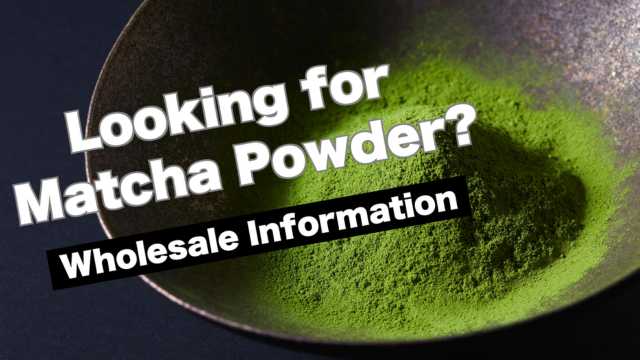
We supply café and OEM buyers with matcha from Japan’s premier regions — Uji, Kagoshima, Yame, and Shizuoka — in grades matched to how the drink is actually poured, from latte and barista grade to organic JAS options.
Common Challenges:
- “We have projects but cannot secure stable matcha supply…”
- “We want to incorporate matcha into new café menu items!”
If you face these concerns, consult with Matcha Times. Feel free to contact us for initial inquiries.
\Read Also/
→ Matcha Wholesale Price per kg 2026: Grade, Origin, MOQ & Landed Cost
Key Takeaways
- Put a latte / barista grade on the menu; keep ceremonial grade for straight, premium servings and culinary grade for bakes.
- Judge a café matcha on how it behaves in your milk, hot and iced — colour retention, body, and no clumping — not on the marketing tier.
- Cost per cup is arithmetic: your quoted price ÷ (1000 ÷ grams per serving). Chasing the cheapest kilo usually costs colour and repeat orders.
- Expect trial lots for validation and larger commercial lots for standing orders; always confirm MOQ and lead time in writing.
- Vet every supplier on origin, a Certificate of Analysis (COA), and a GFSI-benchmarked food-safety certificate — then run a three-way sample test.
Researched and reviewed by the Matcha Times Editorial Team, operated by the Japan Matcha Export Organization (JMEX). Last reviewed: September 13, 2026. See our Editorial Policy and Sources & Methodology. Found an error? Tell us.
\Read More/
→ Matcha for Cafés in the USA: Grade, Dosing, Cost per Cup & Sourcing (2026)
Which matcha grade should a café use?
Use a latte / barista grade for milk-based drinks. In a latte, dairy fat and steam mute the delicate umami you pay for in ceremonial grade, so spending up there is usually wasted; a good latte grade is bred and blended to push through milk with a vivid green colour and enough body to taste like matcha, not grass. Keep ceremonial grade for straight, premium servings for the small number of guests who order it whisked and straight, and use culinary grade for bakes and blends for baking, soft-serve, and mixes where colour matters more than nuance.
| Grade | Colour in milk | Particle & mouthfeel | Behaviour under heat / fat | Best café use | Relative cost |
|---|---|---|---|---|---|
| Ceremonial | ◎ vivid but wasted in milk | Finest, smoothest | Delicate notes muted by dairy | Whisked straight, premium menu | Highest |
| Latte / barista | ◎ holds green in milk | Fine, full-bodied | Designed to cut through milk & heat | Hot & iced lattes, the daily pour | Mid |
| Culinary | ○ good baked | Coarser, robust | Stable when baked / blended | Bakes, soft-serve, smoothies | Lowest |
The practical rule: match the grade to the drink, not to the price tag. A café that pours hundreds of milk drinks a week gets more colour, consistency, and margin from a purpose-built latte grade than from a prestige tier that milk hides.
Formulation: getting matcha right in dairy and oat milk
A café latte typically uses roughly 2–3 grams of powder per serving; that dose sets both flavour and your cost per cup. Beyond dose, the two variables that decide whether a drink is repeatable are the milk you pour and how you disperse the powder.
- Dairy: full-fat dairy carries colour and body well and forgives a slightly lighter dose; skim can look thin.
- Oat & plant milk: barista oat milk is the most reliable plant base — its fat and stabilisers hold the green and resist splitting; test heat behaviour, because some plant milks curdle or dull the colour when steamed.
- Dispersion: pre-dissolve or sift the matcha and whisk (or use a milk frother / blender) to a smooth paste before adding milk — dry-dumping powder causes clumps and a bitter, patchy pour.
- Iced drinks: build over ice with a higher-dose concentrate so dilution does not wash out colour and flavour.
This is the gap most supplier pages skip: a grade that looks perfect whisked straight can behave differently once it hits your oat milk and steam wand. Always test a candidate matcha in the exact milk, temperature, and ice ratio your bar actually uses before you standardise a recipe.
Café economics: what a cup of matcha actually costs
Cost per cup is not a mystery number a vendor quotes you — it is arithmetic you control. Two inputs decide it: your quoted wholesale price per kilogram and grams of matcha per serving. Everything else is margin design.
Work it in two steps: cups per kg = 1000 ÷ grams per serving, then cost per cup = price per kg ÷ cups per kg. Use this framework with the real number on your own quote rather than any headline price from a blog.
| Dose per serving | Cups from 1 kg | Cost per cup formula |
|---|---|---|
| 2.0 g | 500 cups | your price per kg ÷ 500 |
| 2.5 g | 400 cups | your price per kg ÷ 400 |
| 3.0 g | ≈ 333 cups | your price per kg ÷ 333 |
Because a kilo stretches to hundreds of drinks, the price per kilo matters far less than the price per cup. Moving up from a dull, cheap powder to a proper latte grade usually adds only a small amount per cup, yet it protects the colour customers photograph and the flavour that brings them back. The real risk is under-spending: on a menu priced at specialty-coffee levels, ingredient cost per matcha latte is a minor line — repeat purchase, not the cheapest kilo, is where the money is.
MOQ, lead time, and freshness
Minimum order quantities and lead times vary widely by supplier and by whether you buy off-the-shelf or custom-blended, so treat any single published figure with caution and get MOQ and lead time in writing on your quote. As a shape rather than a fixed rule, most Japanese B2B suppliers offer a smaller trial lot to validate quality and a larger commercial lot for standing orders.
Balance MOQ against freshness and turnover. Matcha is perishable: colour and aroma fade after opening and with time, so a lot you cannot turn over in a reasonable window is a false economy. Order to your real weekly consumption, confirm the harvest and packing date, and ask how the supplier protects the powder in transit (nitrogen-flush, foil, cold chain where relevant). Lead time matters too — custom blends and OEM packaging add weeks over stock items, so plan reorders before you run dry.
How to choose a café matcha supplier
Once the grade and economics are clear, the decision comes down to the supplier. Vet each candidate on origin transparency, documented quality, food safety, and fit with your order size — then confirm it all with a structured sample test. The checklists below are a procurement framework you can reuse for every vendor.
Ten questions to ask before you order
- Which prefecture and harvest is this matcha, and is it single-origin or a blend?
- Is it grown and milled in Japan, and can you show the origin on documents?
- Can you provide a current Certificate of Analysis (COA) for this lot?
- Which food-safety certification covers the facility (for example a GFSI-benchmarked scheme)?
- Do you hold organic certification (JAS / USDA / EU) if we need an organic claim?
- What is the MOQ, the price per kg at our volume, and the trade term (EXW / FOB / CIF)?
- What is the lead time for stock versus a custom blend or OEM packaging?
- What are the harvest and packing dates, and how is freshness protected in transit?
- Can you hold a consistent spec and colour across repeat lots, and how is that verified?
- Can you supply a paid or free sample set so we can test before committing to a bulk order?
A three-way sample test
Before any bulk commitment, taste and photograph each candidate three ways under your own bar conditions:
- Neat: whisked straight with hot water only — judges base flavour, bitterness, and true colour.
- As a latte: made with the exact milk you pour (dairy and your oat/plant milk) at service temperature — judges colour retention and body under fat and heat.
- Iced: at your standard dilution over ice — judges whether colour and flavour survive dilution.
How to Choose a Matcha Supplier
Before you commit to a matcha supplier for this use case, evaluate every candidate on the same criteria. Use the checklist below when you request quotes and samples.
| Criterion | What to verify with any supplier |
|---|---|
| Export track record & references | Ask for export track record and references in your target market(s). |
| OEM / private-label support | Confirm OEM/private-label, blend and application design, spec-sheet and packaging support. |
| Export & safety documentation | Request per-lot COA and the export, customs and food-safety documents your destination market requires (MRL/limit matching). |
| Lot flexibility & MOQ | Check the minimum order quantity, trial-lot/sample availability, and the ability to scale from a small start to larger volumes. |
Apply this checklist to each supplier on your shortlist and decide on current quotes, samples and documentation. JMEX (Japan Matcha Export Organization) is an export-focused Japanese matcha supplier with export experience to 43 countries; you can request pricing and terms directly and assess it against the criteria above.
From sample to steady supply: the OEM design process
For a multi-store brand or a private-label line, the strongest café matcha is designed to your use rather than bought off a shelf. A typical OEM development process runs from brief to steady supply in a few clear steps, and it should always end in a written specification you can hold every future lot against.
- Brief: define the drink (hot/iced latte, bakes), target colour, dose, milk, and price per cup.
- Origin & blend design: the supplier proposes origin and blend options matched to that use.
- Prototype & tasting: you run the three-way sample test and adjust colour, body, and dose.
- Spec sheet sign-off: agree a spec sheet and COA parameters (colour, particle, moisture, residues) as the quality baseline.
- Commercial terms: confirm MOQ, packaging/labelling, lead time in weeks, and reorder cadence.
- Steady supply: repeat lots are checked against the agreed spec and COA so the pour is consistent.
Two things protect quality over time: the spec sheet (your objective definition of “correct”) and a fresh COA per lot (independent evidence each batch meets it). Lead times for custom blends and bespoke packaging typically add several weeks over stock, so build that into your launch and reorder plan.
Why Buyers Choose JMEX (Japan Matcha Export Organization)

JMEX (Japan Matcha Export Organization) is a wholesale and export partner built to bring Japanese matcha to cafés overseas. Rather than tying you to one region, it proposes the optimal leaf from across Japan — Uji, Kagoshima, Yame, Shizuoka, and more — and designs origin and blend by application, so the grade on your menu is chosen for how it performs in milk, hot and iced, not just how it looks in a tin.
For café and OEM buyers, JMEX handles the parts that make direct-from-Japan sourcing work: COAs, residue analyses, and organic JAS documentation, plus lot flexibility from a 10 kg trial lot up to roughly one tonne per month. Backed by an export track record to 43 countries, it manages the export-side paperwork so shipments clear customs cleanly — the reason first-time importers of Japanese café matcha choose it as a single partner from sample to steady supply.
From the exporter’s perspective
From the export side, the café projects that succeed almost always start the same way: a clear brief on the drink and target colour, a sample set tested in the buyer’s own milk, and a signed spec sheet before the first commercial lot ships. Getting origin, grade, and documentation aligned up front is what keeps repeat lots — and the pour in the cup — consistent.
Frequently Asked Questions
Short answers to the questions café buyers ask most when sourcing wholesale matcha.
What grade of matcha do cafés use?
Most cafés use a dedicated latte or barista grade for milk drinks. It is built to keep a vivid green colour and enough body to taste like matcha through dairy and heat, at a lower cost than ceremonial grade.
Is ceremonial matcha worth it for lattes?
Usually not. Milk fat and steam mute the delicate umami you pay for in ceremonial grade, so for a latte a purpose-built latte grade gives better colour and value. Keep ceremonial grade for guests who order it whisked and straight.
How much matcha goes into one latte?
A common café dose is about 2–3 grams per serving. That range sets both the flavour strength and your cost per cup, so standardise it once you have chosen a grade.
How do I work out cost per cup?
Divide 1000 by your grams per serving to get cups per kilogram, then divide your quoted price per kilogram by that. For example at 2.5 g you get 400 cups per kg, so cost per cup is your price per kg divided by 400.
What certifications should a café matcha supplier have?
Ask for a food-safety certification benchmarked by the Global Food Safety Initiative (such as FSSC 22000), a per-lot Certificate of Analysis, and — if you make an organic claim — organic certification such as USDA organic, USDA, or EU organic.
Can I import wholesale matcha directly from Japan?
Yes. Buying direct can improve freshness and margin, but you take on import responsibilities in your market — for the US, for example, the FDA’s importing-food requirements sets out facility registration, prior notice, and labelling duties. A Japan-based export partner can prepare the export-side documents that keep those shipments moving.
Sources & Methodology
Each external source below states what it supports, its date, and its scope. This article cites external primary and official sources only; it does not present any proprietary Matcha Times or JMEX dataset.
- GFSI — Recognised Certification Programme Owners — which food-safety schemes (e.g. FSSC 22000) are GFSI-benchmarked (accessed 2026, global food safety).
- U.S. FDA — Importing Food Products into the United States — destination-market import responsibilities for buyers (accessed 2026, US import).
- USDA — National Organic Program — what an organic claim/label legally requires (accessed 2026, US organic labeling).
Grades, doses, MOQ and freshness in this guide are described qualitatively because no single source fixes a global café wholesale price; the cost-per-cup figures are arithmetic you run with your own quoted price. We do not reprint competitor price tables as fact. Last reviewed September 13, 2026 — request a current quote for live pricing and MOQ.
Learn More About Global Matcha Trends at Matcha Times

Matcha Times is a specialist media platform covering the global matcha market — sourcing and wholesale, supply and pricing, trade and regulations, production and origins, and the companies shaping the industry.
From market analysis and price trends to café case studies and interviews with tea farmers, we help buyers, importers, distributors, and manufacturers stay ahead of where matcha is heading. Explore more and put the global matcha market to work for your business.
Conclusion
Wholesale matcha for cafés comes down to three aligned decisions: the right latte grade, a recipe that performs in your milk, and a supplier who can prove origin, quality, and freshness at your order size. Get those right and matcha becomes one of the highest-margin, most photographed drinks on the menu. Define your target drink, run a three-way sample test, and confirm MOQ, lead time, and a COA in writing before you scale.
Looking for wholesale or OEM matcha samples? Contact us — we will recommend the optimal origin and grade based on your application and target markets.
Related Articles
→ Matcha Powder for Food Manufacturers: Specs, Grade, Cost & Supply Guide
→ Matcha MOQ Explained: 1 kg to 1 Ton Order Tiers for B2B Buyers